
The coat of arms generator
Design your own coat of arms from your surname — free, no signup, results in seconds.
Family surname
Style
Roman classic — bold tinctures, formal parts.
Free preview with watermark · no account needed
Full kit from $15
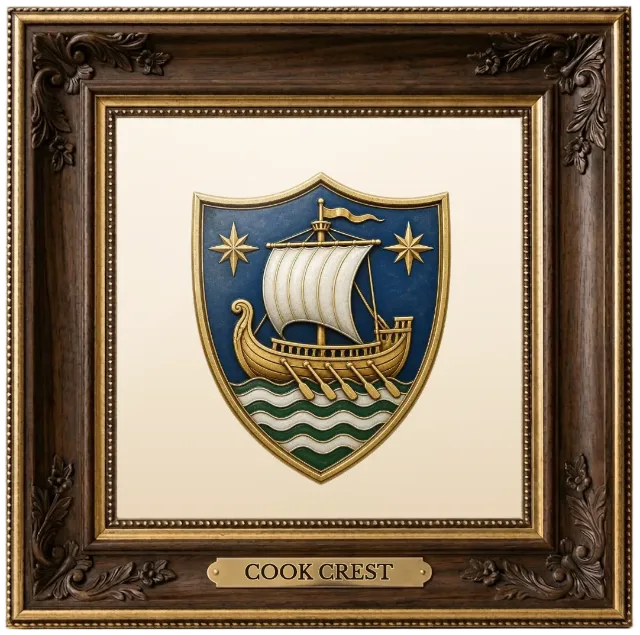
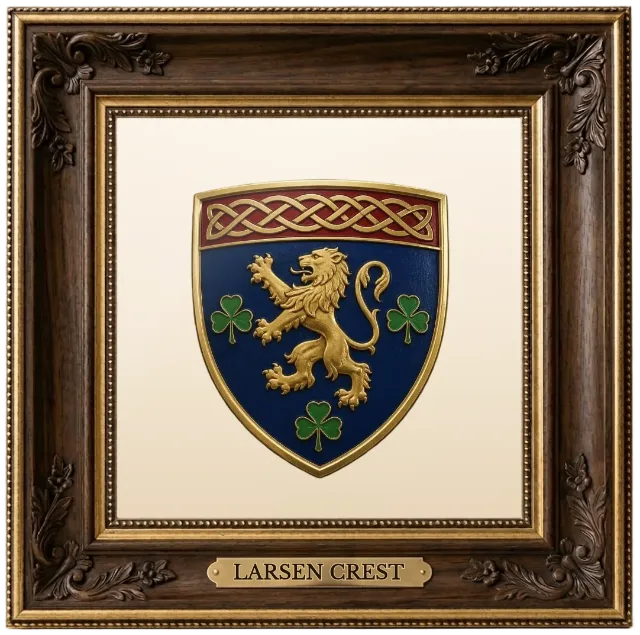
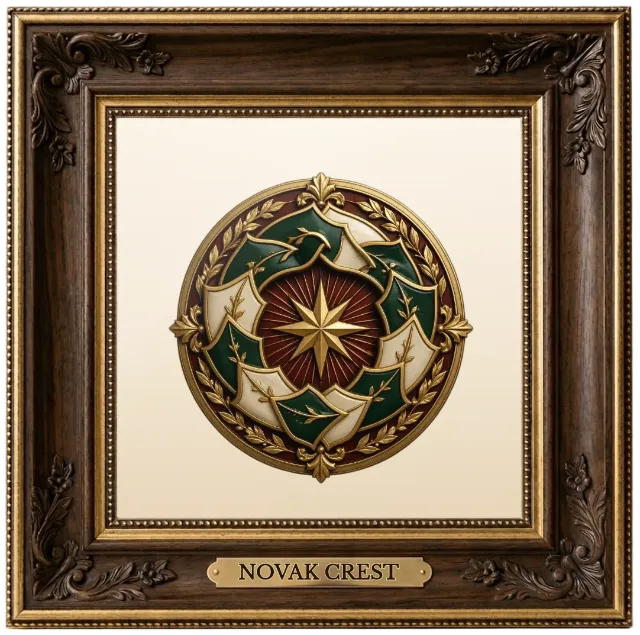
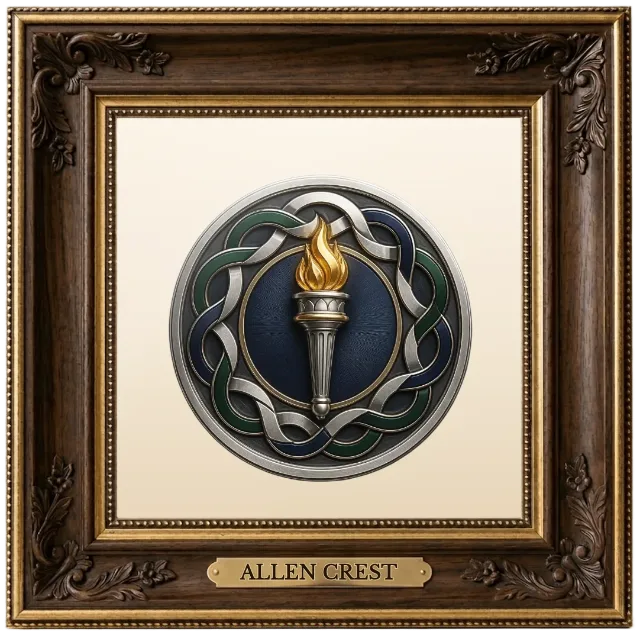
Your design
Rendered by the same engine that powers the full kit
Your design will appear here.
Type a surname above and press Generate — free, no account.
The full family crest kit
8 watermark-free files · from $25
One-time unlock · yours forever. No subscription.
★ Unlock the full kitWhy this coat of arms generator
RULE-TRUE
Respects real heraldry
Every render follows the rule of tincture and the classic shield anatomies — not random clip art with a frame.
YOURS ONLY
Designed from your name
The same AI engine behind the full crest kit composes field, charge and palette from your surname and style.
FREE FIRST
See it before you pay
Generate with watermark, free and accountless. Unlock the watermark-free kit only if you love the result.
How the coat of arms generator works
What is a coat of arms?
Anatomy of the full heraldic achievement
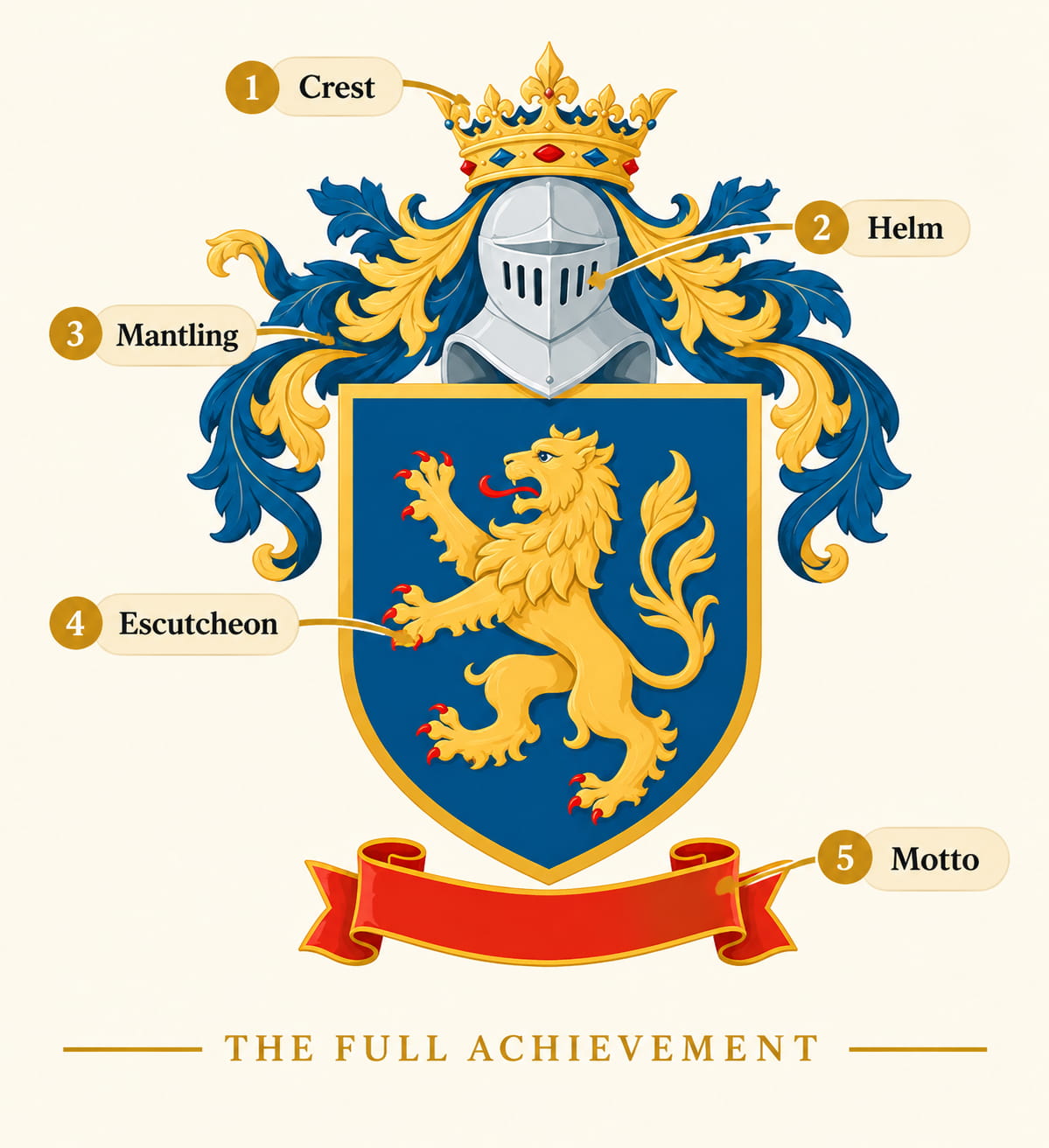
A coat of arms is the complete heraldic achievement: the shield, the helmet above it, the flowing mantling, the crest pinned on top and the motto ribbon beneath. It began in twelfth-century Europe as a way to recognize an armoured knight whose face was hidden — and grew into the emblem a family passed down through generations.
Online, people say “family crest” when they mean the whole design. Strictly, though, the crest is only the figure standing on top of the helm — a stag, a crown, a wing. Everything else you see below belongs to the coat of arms, not the crest.
Every element draws from a fixed palette called tinctures: two metals — or (gold) and argent (silver) — and five colors — gules, azure, vert, sable and purpure. The classical rule of tincture keeps a design readable: metal never lies on metal, and color never lies on color, so the charge always stands out from its field, whether seen across a hall or on a phone screen.
A coat of arms generator brings that vocabulary to families who will never petition a herald. People use the designs for genealogy albums, wedding and anniversary gifts, reunion banners, club badges — or simply as a personal mark that feels older than a logo. The grammar stays traditional; the reasons are modern.
EscutcheonThe shield that carries the family's charges.
HelmThe helmet; its style hints at rank.
MantlingCloth swept from the helm, drawn like leaves.
CrestThe figure above the helm — not the whole design.
MottoA short family saying on the ribbon below.
TincturesThe colors and metals of the design.
See the structures
The engine draws from the classic shield anatomies — heater, French, oval, lozenge — and composes each with parted fields, roundels, wreaths or a single focal charge. The four newest designs from the library show the range: compare how each leads the eye and how much ornament it carries. One charge on a calm field stays readable at any size; parted fields and wreaths add rhythm without crowding.
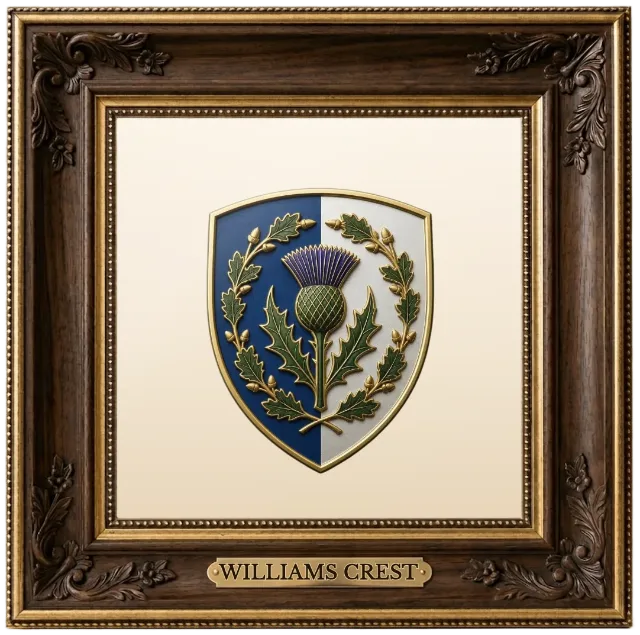
Williams
A thistle in a gold wreath on a per-pale blue and white field — quiet, balanced, Scottish to the core.
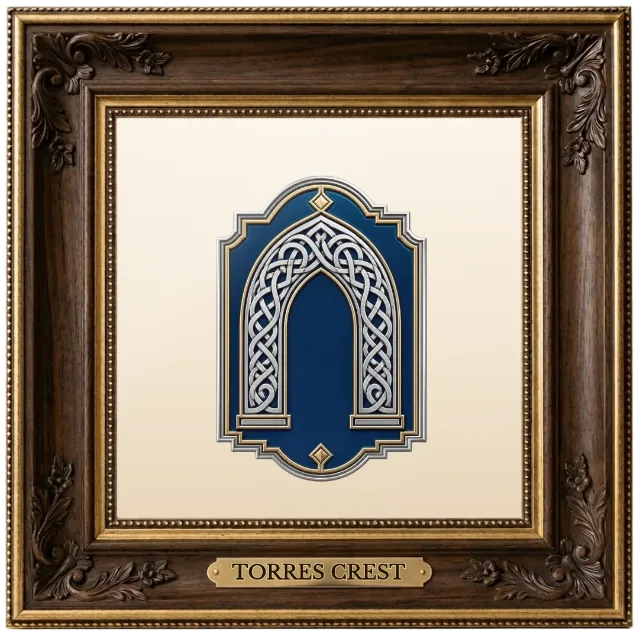
Torres
Celtic knotwork drawn into a Gothic arch — one continuous line built into a doorway.
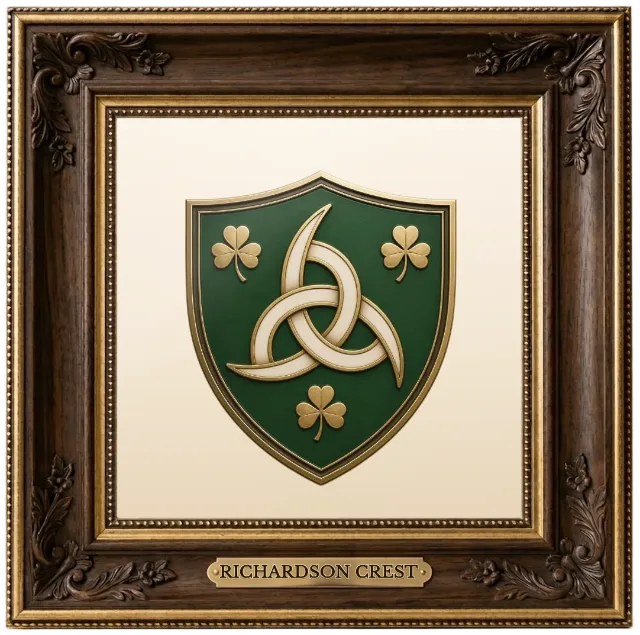
Richardson
A gold trinity knot on Ireland green, flanked by three shamrocks.
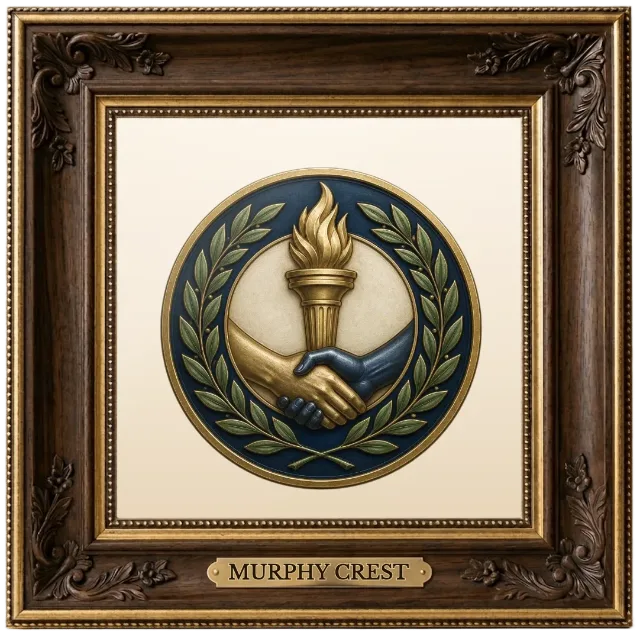
Murphy
A torch above a clasped handshake, set in a laurel roundel — unity made emblem.
Questions, answered
Is this a real, registered coat of arms?
No. Emblecraft creates original symbolic designs inspired by heraldic tradition. They are not registered grants of arms and assert no historical entitlement.
Can I use my design commercially?
Yes. Once you unlock the full kit, the files are licensed for personal and commercial projects — invitations, prints, signage and more.
What's the difference between a coat of arms and a family crest?
The coat of arms is the whole achievement — shield, helm, mantling and motto. The crest is only the figure above the helmet. The terms are used loosely online; here we keep them precise.
Is this a coat of arms maker or a generator?
Both — you describe the family, the generator renders it. Most people call tools like this a coat of arms maker or creator; the result is the same: an original heraldic design from your surname.
How does the generator turn my surname into a design?
The planner reads your surname for sound, origin associations and style cues, then composes a field, a charge and a palette that follow classic heraldic grammar. The result is always an original composition — never assembled clip art.
Which styles can I choose?
Three: Medieval for bold tinctures and formal parts, Modern for cleaner geometry and calmer fields, and Nordic for cool greens, blues and chevron structure. Every style still respects the rule of tincture.
Can I share or print the free design?
Yes — the free preview arrives with a light watermark and can be shared online freely. For print-quality files, the unlocked kit includes the watermark-free crest in eight ready-to-use formats.
Is my design unique?
Yes. Each render is composed for your surname and style combination — the planner does not stitch stock emblems, and the same name can yield several different directions. Generate variations to explore the range.
Do I need to know heraldry terms?
No. You only type a surname and pick a style. When a term like tincture, blazon or escutcheon appears, the sections above explain it in plain words.
Do I need to know my family history?
No. A surname and a style are enough. If you do know your heritage or family values, the guided maker on the homepage can weave them into the design.
Do I need to install an app or create an account?
No app and no download. Generating is free, right in your browser. An account is only needed if you decide to unlock the full download kit.
Keep exploring